
Admin
27-08-2026How Vietnamese People Celebrate Tet
A B2 reading about Vietnamese Lunar New Year customs, combined with B2 practice on passive voice, third conditional, and reported speech.Lượt xem: 8 Nguồn: Daisy Việt
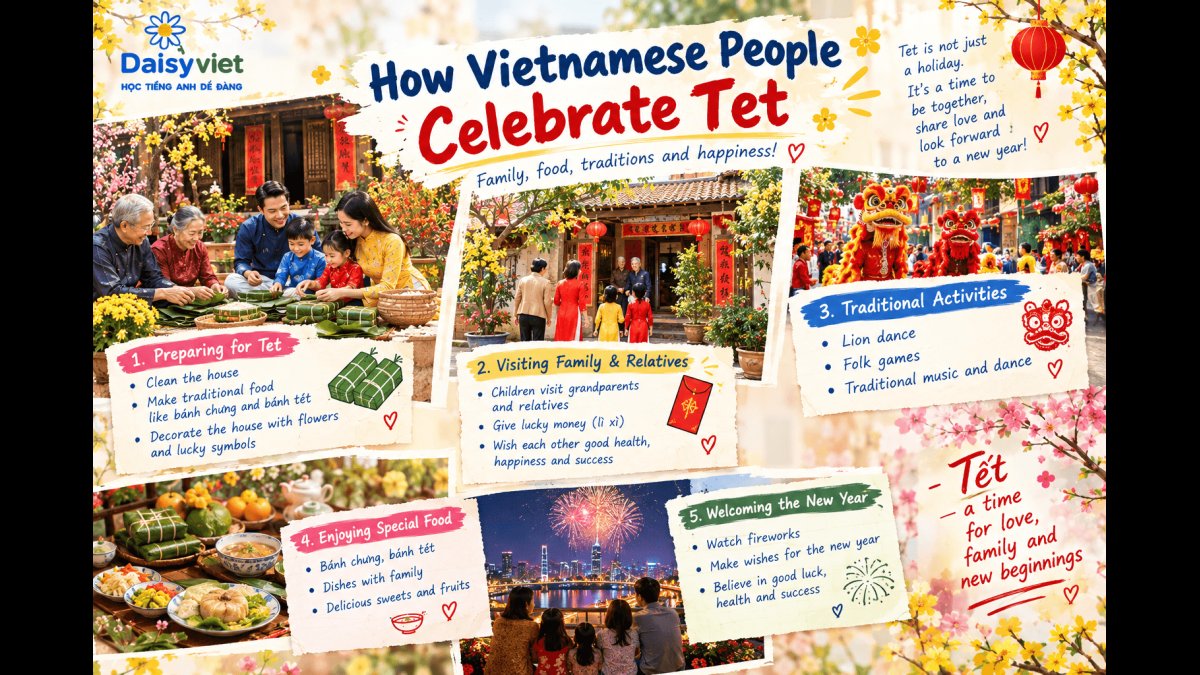
Tet, or Vietnamese Lunar New Year, is regarded as the most significant celebration in Vietnamese culture. It usually falls between late January and mid-February, and preparations often begin weeks in advance.
In the days leading up to Tet, houses are thoroughly cleaned, debts are paid off, and disagreements are resolved, because it is believed that the new year should start with a clean slate. Traditional foods such as bánh chưng, a square sticky rice cake wrapped in banana leaves, are prepared by families together, and this process is often seen as a way of strengthening family bonds.
On the first day of Tet, younger family members visit their elders and wish them good health and prosperity. In return, children are given lucky money in red envelopes, a custom that is said to bring good fortune throughout the year. Streets and homes are decorated with peach blossoms in the north and apricot blossoms in the south, both of which symbolize renewal and hope.
If Tet had not been passed down through so many generations, this rich blend of customs might have been lost entirely. Fortunately, even young Vietnamese people who have grown up abroad are often told by their parents that preserving these traditions is essential to their cultural identity.
Ultimately, Tet is far more than a holiday; it is a reminder that family, gratitude, and tradition still lie at the heart of Vietnamese life, no matter how much the world around it continues to change.
Grammar Structure (Phân tích Ngữ pháp)
- Passive Voice: "Houses are thoroughly cleaned, debts are paid off, and disagreements are resolved."
- Third Conditional (If + past perfect, might have + V3): "If Tet had not been passed down through so many generations, this rich blend of customs might have been lost entirely."
- Reported Speech: "Young Vietnamese people who have grown up abroad are often told by their parents that preserving these traditions is essential to their cultural identity."





💬 Bình luận (0)